Day 1: Monday, November 23
At 6:30 on Monday morning, I saw a missed call. It was Kim Ives.
His message was blunt: “We have an urgent matter.”
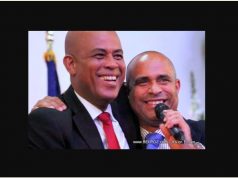
Jean Max Louissaint, a Haitian journalist who uses the alias Ralph Laurent, had been detained at the Santo Domingo airport the previous afternoon and transferred to the Haina Detention Center.
Max, as he’s known, is a U.S. citizen living in New Jersey. The Dominican police had threatened him, mistreated him. He feared they would send him to Haiti, where death waited for him plainly.
I read Kim’s text and passed it on. Everyone in my phone who had even a sliver of influence received it — Dominican authorities, U.S. officials in Santo Domingo, human rights advocates, lawyers, journalists. You spread the word however you can; you hope someone answers.

I put the alarm on Instagram. In cases like this, getting the word out can be the only protection a person has. People began sharing it, especially in the Dominican and Haitian diaspora. It was urgent that the authorities knew the case was already out in the open. Silence is how people disappear; visibility is the only defense.

By nine o’clock a few messages came back: Max was part of the “gangs,” some contacts said. “Better to stay away.”
It was the familiar shorthand used against Haitians — an easy accusation that required no evidence, only prejudice. The word gang did the work of erasing a man’s name, his profession, his life. It was a label used to justify racism. A way to strip individuals of their rights. And most people, hearing that word, stepped back.
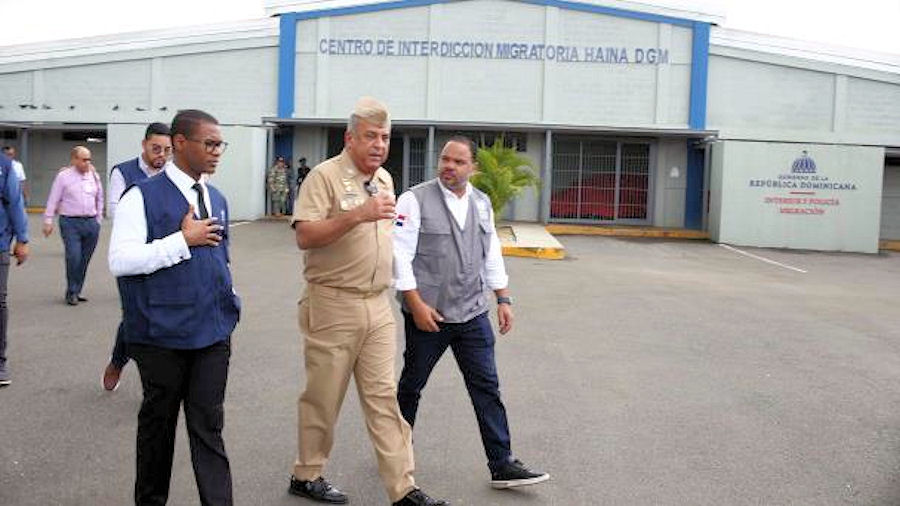
By 10:00 a.m., I reached the offices of Dominican Migration near Santo Domingo’s Malecon. I met there with one of Max’s friends. Two officers pointed the way we had to go around the building, to a door on the right. We walked toward the prison where they kept him.
We had no access to him; the authorities were interrogating him.
His cell was on the second floor. It faced the Caribbean Sea. An old blue awning hung over the bars, dimming the light. The sun hit the building hard but could not enter the cell. Arms hung through the window. You saw their outlines first, then the eyes — watching the people below who walked freely.
We had no access to him; the authorities were interrogating him. Around 11:00 a.m., someone sent me contacts of the Committee to Protect Journalists (CPJ). Haïti Liberté contacted them.
Sixteen minutes later, his friend’s phone rang. It was Max. “They are interrogating me,” he said, “and then I’ll be able to meet with you.” He seemed calm. His friend repeated many times how strong he is.
More calls came. People warning me to be careful because their friends in Haiti were insisting he was a “gang” member. There was that word again. Contacts were backing out one by one.
By noon, Max said the U.S. Embassy was helping. “We have to wait; don’t worry,” he said to me. Whenever he called, he asked if I was OK, if I was tired, and if I was hungry.
I remembered a dinner a few nights earlier with the economist Mariana Mazzucato. Someone at the table said they were hungry while we waited for our food.
“You’re not really hungry,” Mariana said with a kind smile — thinking of the millions who go without food every day. “I’m not really hungry,” I told Max.
After the U.S. Embassy intervened, everything changed. No Haitian, even a Haitian-American like Max, was treated with respect – unless they had that kind of shield. It was the nod from the United States that protected him. On an island of two nations born from the same soil, sharing bloodlines and history, both victims of U.S. military occupation, it was strange to see where safety came from.
The Dominican government has said that it conducts its migration policies with respect for everyone’s dignity, but Haitians’ treatment tells a different story: a habit of suspicion, of easy accusations, of abuse and intimidation, of looking away when help is needed. I urge the new Dominican Minister of Interior and Police, as she is someone committed to human rights, to pay close attention to this and to help strengthen the safeguards that protect every person in the country, so that dignity is upheld in practice as well as in principle. We talk about Latin America and the Caribbean standing together. In practice, racism still calls the shots.
Haiti — the first free Black republic — once sheltered and sponsored Bolívar, asking only that he free the enslaved. Haiti helped make the independence we claim today. And yet to see the United States be the country to step in to protect a Haitian journalist showed how far regional solidarity has fallen.

There was a before and an after in the U.S. involvement with Max’s case. And neither of them spoke well of us Dominicans. But it is within our power to change that.
By 3:30 p.m., social media ignited. Fake news claimed he had been deported to Haiti; people celebrated his death. As the rumors arrived, often disguised as facts, I advised his family to stay off of social media.
By 4:00 p.m., it was confirmed: he would return to the United States, not Haiti. The Dominican authorities had finished their part of the process. They had nothing on him — no charges, no grounds for deportation. We were told he would be sent back that same day.
I saw Max for the first time as they moved him from one building to another. It was night, and, aside from the guards, there was no one else. We recognized each other at once and exchanged a quick wave and a small smile from a distance. The guards were escorting him.
He was not taken to the airport to return to the U.S. that night. He was taken back to Haina. He said he was all right. His jailers said he would be freed by 10:00 a.m. the next day.
Haïti Liberté kept alerting the CPJ, urging them to condemn the arrest.
Day 2: Tuesday, November 25
We waited through the morning. Ten o’clock came and went. I kept asking to be let into the secured area of the Migration offices, where they held the detained. Entry was by permission only. When they allowed it, they brought him out of the cell and into a small reception room, and I could sit with him there for a while.
We were told again that he would be sent back to the United States. By then the guards and officials, more at ease, joked that he was a VIP because he was a U.S. citizen. Here, being from the Caribbean rarely carries weight. They even assumed I was from the U.S. Embassy; it simply did not cross their minds that a Dominican might be standing with a Haitian. It spoke less about them than about the patterns we have all inherited in the region, and how deeply they still shape the way we see one another — and the way we see the United States.
It brought back my first time in Puerto Rico. An airport guard greeted me with, “Welcome to the United States of America.”
“Por favor, no vuelva a decir eso,” I told him — please don’t ever say that again.
I requested permission to have lunch with Max. We shared it with others who were also detained. He didn’t eat but only drank water. By 3:00 p.m., we were told the process was almost done. Max would leave today. Around 4:00 p.m., he took a small bite of food — the first in days. Lunchtime stretched on. They let me stay, and as long as someone sat beside him, they didn’t lock him back in the cell.
Each time they moved him to another detention center, there was no certainty he would come back.
At 7:00 p.m., the news changed again. Now they said he would leave on Wednesday. The sun was going down. So was the little confidence we had left. Max was brought down to the parking lot with the other detained Haitians. Their hands were tied with plastic FlexiCuffs. They boarded a Migration Control bus, as they did every night. We spoke briefly as he climbed in. I told him everything was all right, that we would see each other in the morning. None of us knew if that was true. Each time they moved him to another detention center, there was no certainty he would come back. He was a journalist; that alone put him at risk. The bus pulled away, taking all of them back to Haina. We had nothing to hold on to except the hope he would be there in the morning.
Haïti Liberté continued to alert the CPJ and press for action.
Day 3: Wednesday, November 26
He was back in the morning. So were we.
This day felt different. Max asked for food for the first time since his detention. He was not locked in the cell anymore but kept in an office with the administrative staff.
The soldiers were everywhere. Posted at the doors, drifting through the parking lot, some visibly armed. They kept telling me to wait inside the lunchroom on the first floor. Government officials ate their breakfasts there, their lunches later, while right above them the detained, including women with their babies, sat hungry, watching the hours with nothing in their stomachs and even less in their favor.
I stayed outside. I kept my eyes on the building, letting the guards see that I was still there. It was necessary that they knew Louissaint was not alone, that if they moved him, I would see it. Guarding the guards, you might call it.
At 11:00 a.m., two guards brought Max down, his hands bound again with plastic FlexiCuffs. He had asked to withdraw his money and close his account at Banreservas, the state bank with a small branch in the Migration parking lot. He’d seen so much pain and hardship among the Haitian detainees — particularly one desperate woman with a sick infant in her arms — that he wanted to leave them with the little he had. He had already been giving other detainees money to buy food, even though he was not eating.
Outside of the bank, a Haitian man recognized him and pleaded with the soldiers for a photo. They allowed it. Max then made his withdrawal from the bank, and the soldiers took him back upstairs to the holding pen.
At 12:30 p.m., we were told by Migration that they were looking to get his ticket. By 1:00 p.m., it was official: he had a flight for 7:00 p.m.. Still, no action came from CPJ.
By 2:00 p.m., we were back inside the Migration offices together. He looked different — relieved, lighter. Twenty minutes later he asked one of the officials to take a photograph of us.
He was told to get ready. Two non-uniformed men would bring him down to the parking lot and then on to the airport.

At 2:30 p.m., before he got into the car, he asked one of the men if he was allowed to take a last photo and video. One of them filmed; the other stood in front of the camera. In the video, he thanked everyone who had helped him and said, “The fight goes on. We fight for human rights. We fight for the weak. We fight for whoever. We keep fighting.”
He raised his left fist. I raised mine back. “Let’s do it,” I said. “Let’s do it,” he said.
It was time to go. We hugged. We both cried.
“Thank you, sister,” he said.
“Take care, brother.”
The two men got in the car with him. As the car pulled away, he lowered the window and raised his left fist one more time. I raised mine back.
At 3:30 p.m., we confirmed he had arrived at the Las Américas International Airport. At 4:00 p.m., he began the immigration process, and was escorted by special agents to the gate.
His plane took off around 7:00 p.m..
He reached the United States at approximately 11:00 p.m.. Department of Homeland Security agents pulled him aside for a final interview.
Day 4: Thursday, November 27
No deportation order. No charges. Around 3:00 a.m., Jean Max Louissaint was released and finally returned to his waiting family and home.
Noa Batlle Manukyan is a Dominican artist and human rights activist as well as Haïti Liberté’s Santo Domingo correspondent.