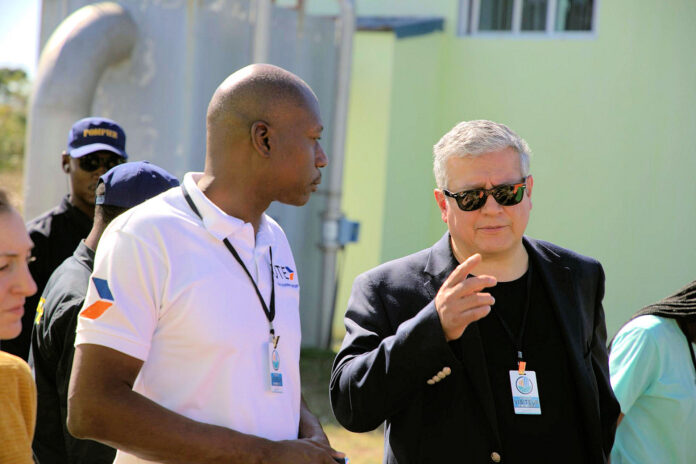

The Haitian people still believe that power resides in the National Palace, in Parliament, or in large corporations. But the true center of power lies elsewhere, lurking in the air-conditioned corridors of a technocratic institution that no one has ever elected: Unité Technique d’Exécution (UTE) or the Technical Execution Unit.
I. The Power No One Elected
Created by a simple ministerial decree of the Minister of Economy and Finance in 2004, the UTE has metamorphosed, crisis after crisis, into a parallel state, a technocratic machine controlling money, contracts, and, by extension, the economic destiny of the entire nation. Needless to say, it is the invisible pivot of international economic governance in Haiti.
While private companies — GB Group, Haytrac, E-Power, Valerio Canez, Sogener — fight over scraps of markets and ministers change with political crises, the UTE remains. It is the body that opens and closes the foreign money tap, that decides what gets built, who gets rich, and who remains in poverty.
In other words, the UTE is the key to the vault through which the billions that determine our future now pass. It has become, in fact, the authority that controls the bulk of international financial flows dedicated to reconstruction and national infrastructure.
II. Absolute Control of Foreign Funds: The Capture of the Country
Every dollar intended for Haiti’s reconstruction passes through the UTE. Neither the Treasury, nor the Parliament, nor the government controls its flow.
When the World Bank, the Inter-American Development Bank (IDB), or the French Development Agency (AFD) finance a $100 million project, the money bypasses the state — it passes directly into the hands of an administrative structure that acts on behalf of the donors, not the Haitian people.
The UTE signs the contracts, selects the beneficiaries, and oversees the payments. It has captured the state’s most crucial economic function: that of spending, allocating, and deciding.
In a normal republic, it is the ministry that governs. In Haiti, it is the UTE that commands.
Private companies, for their part, must negotiate their survival within the contractual ecosystem controlled by the UTE.
In Haiti, whoever controls the flow of disbursements holds more power than whoever holds the capital.
Power in Haiti is no longer political or economic — it is fiduciary.
III. Technocratic Immunity: A State Under Foreign Trusteeship
The UTE is accountable to no one in Haiti. It does not obey Haitian law, but rather the procedures in the World Bank and IDB manuals. It recruits its own experts, engineers, and consultants, often from international organizations, and sets its salaries outside the national scales.
In other words, because it applies the donors’ rules rather than those of Haitian law, the UTE enjoys de facto immunity. Its contracts, recruitment, and calls for tenders are immune from parliamentary oversight, the Superior Court of Auditors, and administrative courts. It is untouchable because it is not subject to any national jurisdiction. No minister can sanction it. No member of parliament can audit it. It functions like a foreign enclave within the Republic.
The executors — those who decide where and how most development dollars will be spent — are not in Washington or Paris. They are here, in Port-au-Prince, in the UTE offices. But they answer to no one but the donors.
Thus, the UTE has become a parallel state: technocratic, fluid, bilingual, aligned with the donors, and therefore untouchable.
IV. The UTE: Guardian of the Market, Distributor of Privileges
In practice, the UTE selects the companies that will have access to major national projects: roads, bridges, solar power plants, hospitals, port infrastructure. Its calls for tenders define who grows and who disappears. Nothing is built without technical validation from the UTE. No company, however powerful, can exist without its approval.
The UTE chooses who wins and who dies economically. It distributes contracts like weapons: to maintain the balance of dependencies, never to liberate the country.
Private groups, however wealthy, wait for its green light to breathe. And this is where the evil takes root: in a structural dependency organized so that no one, neither the elites nor the state, can act without the donors’ authorization.
The UTE is the guardian of the temple, the invisible filter between financing and execution. Without technical validation from the UTE, no project exists. Without administrative approval from the UTE, no payment is released.
V. The Executive Arm of Foreign Powers
For the IDB, AFD, World Bank, and the AFD, the UTE is the country’s only “reliable” institution. This judgment is in reality a condemnation: it declares Haitian institutions incompetent, and that a technocratic body, financed and directed from abroad, must reign in their place. This makes the UTE the preferred channel for foreign governance in Haiti.
Donors govern through the UTE. The UTE governs through contracts. And the ministries, for their part, execute without understanding.
This is the most sophisticated form of colonial tutelage: one that goes unspoken, but operates through bank accounts, calls for tenders, and invisible signatures.
The result:
- The UTE enjoys greater international legitimacy than national institutions.
- Ministries have become mere political showcases, while the fiduciary technostructure concentrates the reality of power.
- Democratic breach: lack of accountability. Audits are mainly the responsibility of donors; full reports are not systematically published at the national level.
Parliament, despite its sovereignty, does not exercise the necessary oversight over these flows. This is an unacceptable trend for a state that claims to be democratic.
VI. Total Absence of Democratic Oversight
The UTE is not accountable to Parliament. Its audits are conducted by donors, not by Haitian institutions. It manages billions of dollars off-budget, without full publication of disbursements, beneficiaries, or socioeconomic benefits.
It is a parallel government, under foreign supervision, operating in a Haitian institutional vacuum.
VII. Exclusive Access to Strategic Data
The UTE holds all sensitive financial data on projects, companies, and future financing. It knows where the money is going, when it will arrive, and which companies will benefit, even before the ministers concerned.
This advance information makes it possible to guide alliances, subcontracting, and even political careers. Needless to say, this knowledge gives its agents real political power, which is difficult to control. Private groups, on the other hand, are proceeding blindly, without access to these forecasts.
VIII. The Technocratic Elite: Haiti’s New Local Masters
The UTE’s transnational technocratic aristocracy is fluid, multilingual, internationally educated, seemingly apolitical, connected to donors, and without national loyalty. It speaks the language of “sustainable development,” but its true purpose is the neutralization of Haitian power.
These technocrats do not possess the capital, but they do possess the key to the safe. They do not run the state, but they manage it for others. Because they decide what is built. They do not believe in sovereignty: they believe in indicators. And while they compile reports, the country dies in the silence of numbers.
This is the transformation of Haitian power: from patrimonial fiefdom to administrative oligarchy.
IX. The UTE: The Source of Haiti’s Administrative Evil
The Haitian state cannot be governed because it no longer possesses its own administrative heart. Political decisions are empty, development plans are fictitious, because the real levers are held elsewhere.
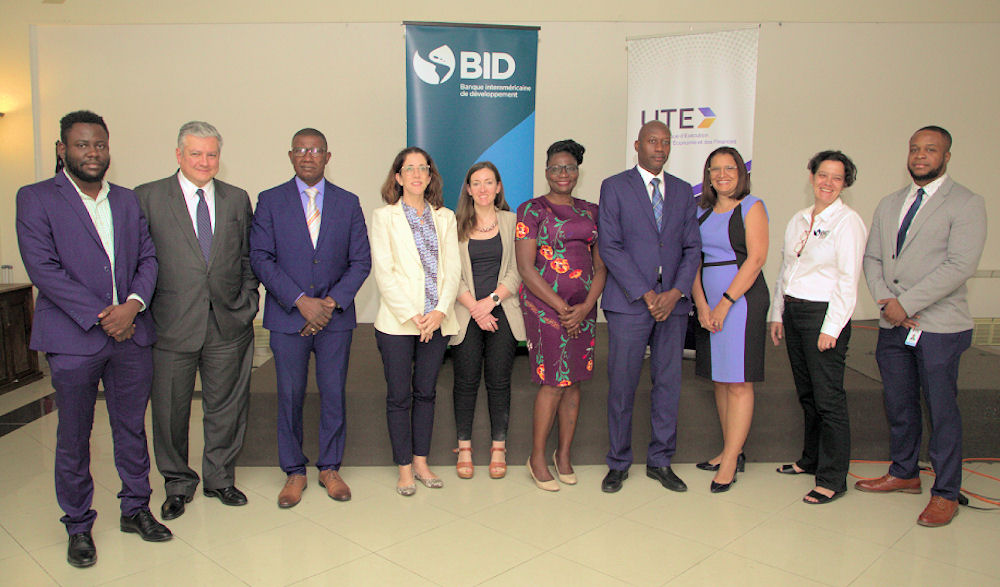
Haiti is no longer administered: it is piloted. Our ministries do not govern — they obey a system where dependency has been institutionalized.
And that is why no government, no reform, no election will change anything until the country regains control of the UTE and international financial flows.
X. Appeal to Haitian Youth and Academics
I address myself here to those who think, who understand, who see beyond the curtain. To young academics, engineers, economists, lawyers, computer scientists, researchers, journalists: You are the only ones capable of deciphering the administrative lie in which we live. You must demand an international and national public audit of the UTE. You must demand the publication of all contracts signed since 2004, project by project, dollar by dollar.
And you must understand: taking back the UTE means taking back the State. Without this administrative reconquest, there will be no sovereignty, no independence, no economic justice. The fight begins in the universities, in conscience, in truth.
XI. Conclusion: Real Power in Haiti Is No Longer Economic, it Is Fiduciary
The UTE is more powerful than private groups because it controls access to international financing, the country’s scarcest and most decisive resource.
The oligarchs dominate the internal markets, but the UTE controls the gateway to global capital.
In Haiti, sovereignty is no longer measured by who owns, but by who signs. Wealthy Haitians have the money, but the UTE holds the signature. And as long as the country does not regain control of its financial flows, it will remain administered — not governed.