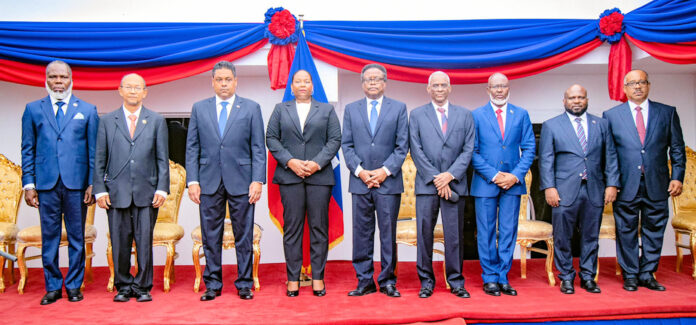

This coming weekend – on Sat., Feb. 7, 2026 – Haiti’s Transitional Presidential Council (CPT) expires, and it is still unclear what new interim government will take its place.
Initially, it looked like de facto Prime Minister Alix Didier Fils-Aimé, whom the CPT empowered in November 2024, would remain in his post with the strong backing of the U.S. and European Union.
Last week, five of the nine CPT councilor-presidents voted to fire him, but he blocked their decree’s publication in the government journal Le Moniteur (which makes such acts official) thereby stopping his ouster in formality-observant Haiti. It appeared that he might then govern much like former de facto Prime Minister Ariel Henry did from July 2021 through February 2024: a head of government (Prime Minister) without any head of state (President).
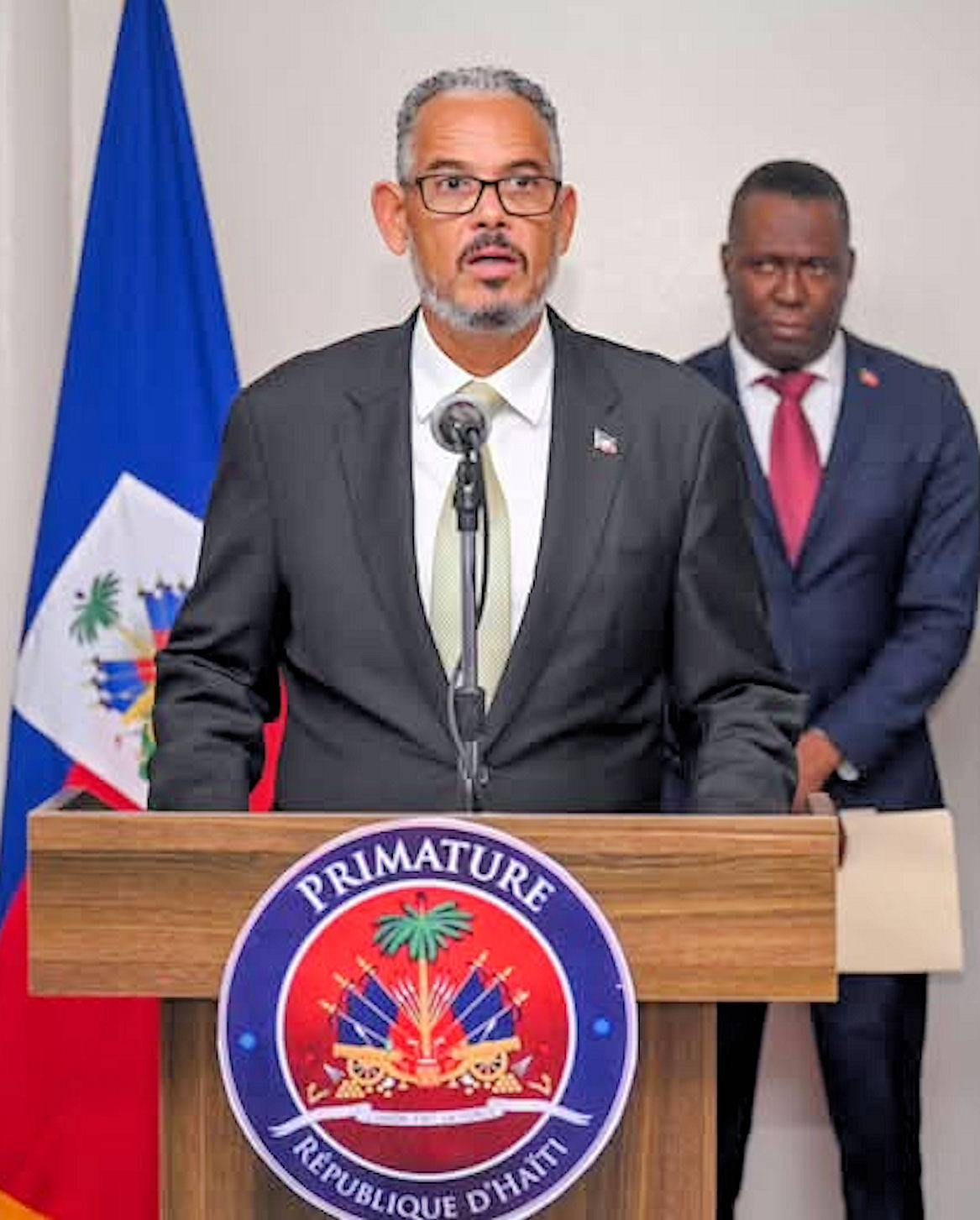
Last week, Fils-Aimé’s position looked very strong. He has a close ally in Laurent Saint-Cyr, the CPT’s councilor-president representing the bourgeoisie and the last acting president until Feb. 7. Both men are part of and defend the interests of Haiti’s private business sector – the oligarchs – whose attitudes and positions align with Washington’s.
But the situation might now be changing. There have been calls for years from around Haiti, including from the Viv Ansanm (Live Together) armed group coalition headed by former-cop-turned-revolutionary Jimmy “Barbecue” Cherizier, for a Supreme Court (Cour de Cassation) judge to become the interim head of state until a new president can be elected, as the 1987 Constitution stipulates.
As we go to press, the Supreme Court’s president Jean Joseph Lebrun has been nominated to replace the CPT, and he is willing to do so, according to former Senator Jean-Renel Sénatus, but negotiations with the CPT are ongoing after three days of dialogue, which has proposed a three-headed presidency: one president from the CPT, one from the Supreme Court, and one from “civil society.” Whether this proposal will go anywhere, and, if it does, whether the three presidents would reappoint Fils-Aimé as head of government, all remains an open question.



But one thing is for sure. Whatever arrangement the CPT, Supreme Court, and other “civil society” power-brokers work out, the U.S. Embassy will have to approve it. Washington made that point today by deploying the U.S. Navy destroyer USS Stockdale just offshore in the Bay of Port-au-Prince in a not-very-subtle display of Trumpian gunboat diplomacy.
Meanwhile, Washington’s soft-power agencies (the death of which have been greatly exaggerated, to paraphrase Mark Twain) are setting the stage for yet another rigged election in Haiti.
The NED’s role in undermining Haiti’s sovereignty
The CPT did manage last year to finally assemble a new Provisional Electoral Council (CEP) which has scheduled the first round of legislative and presidential elections for Aug. 30, 2026. Final results are to be published as late as Jan. 7, 2027, so that an elected government could take power on Feb. 7, 2027.
Washington will seek to engineer the outcome of these elections, should they even happen, principally through its National Endowment for Democracy (NED), a CIA cut-out dedicated to advancing U.S. interests and orchestrating U.S. regime-change operations in foreign countries.
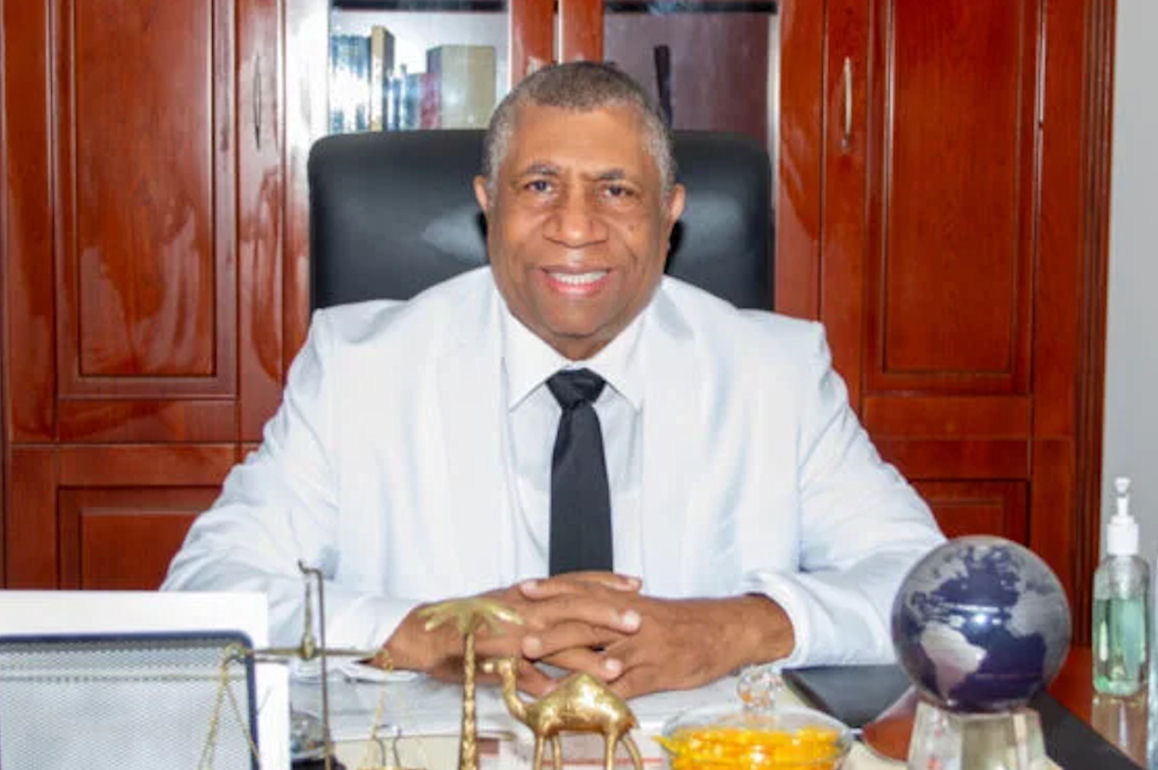
The NED’s co-founder Allan Weinstein, once explained to the Washington Post that “a lot of what we do today was done covertly 25 years ago by the CIA.”
Researcher Mike Benz recently revealed that the CIA supported the NED’s creation, citing a letter from then CIA director William J. Casey which said that the U.S. “national fabric” would be “well served by such an organization.”
Journalist Brian Berletic pointed out that, despite the perception that the Trump administration reformed the NED, it in fact continues to “serve as a sophisticated instrument of political manipulation” for U.S. imperialist interests.
The NED has played a significant role in undermining Haiti’s sovereignty since its founding in 1983, providing funding and support for organizations and political actors who support U.S. imperialist policies in Haiti.
Facing increasing scrutiny from investigative journalists and a Trump administration which employs a more aggressive, gangster-like imperialism, the NED no longer shares the names of its partner organizations in the countries it has targeted.
On its website, the NED explains that it now “refrains from publicly disclosing grantees’ identities when doing so could jeopardize their safety.” Consequently, only “core institutions” like the National Democratic Institute (NDI) and International Republican Institute (IRI) are listed on its website.
Berletic notes that the NED continues to operate “with the same impunity as any covert intelligence operation – only without the oversight, legal restrictions, or classification protocols typically associated with CIA activity.”
The NED plan in Haiti for 2026
The NED is currently funding two programs in Haiti aimed at influencing political parties. It has contributed US$224,873 to its Strengthening Political Party Accountability and Civic Engagement program in addition to US$300 000 to the NDI for its Strengthening New Political Parties program.
The NED has played a significant role in undermining Haiti’s sovereignty since its founding in 1983
While these sums may seem small, in a country as impoverished as Haiti they can have profound effects.
The NED programs are working in concert with Fils-Aimé’s Ministry of Justice and Public Security (MJSP) to consolidate Haiti’s hundreds of small political parties and coalitions into larger ones.
Given the U.S. government’s consistent meddling in Haiti’s elections (with the support of CORE Group allies) over the past few decades, Haitians are justified in suspecting that the U.S.-backed party consolidation is an effort to turn Haiti’s next election into a “selection” that serves U.S. interests.
Indeed, Haiti has not had a democratic election since 2000 when Jean-Bertrand Aristide was elected with over 90% of the popular vote. Following the U.S., Canadian, and French government backed coup in 2004 that overthrew Aristide and forced thousands of other democratically elected Fanmi Lavalas (FL) representatives from office, the meddling in Haiti’s elections continued.
The NED funded key organizations which backed the 2004 coup, while its subsidiaries, the NDI and IRI, worked to support political parties opposed to the Fanmi Lavalas government.
Washington also intervened into the 2010-2011 elections to assure the U.S. government’s preferred candidate, Michel Martelly, won. This meddling led to a very low voter turnout of 18% in Haiti’s following election in 2016 that was marred by fraud and political violence.
The transitional government’s plan to support political parties
In a move to manage Haiti’s political parties and their ability to participate in the election, Fils-Aimé’s government officially launched the Political Party Capacity Building Program on Nov. 1, 2025.
In a speech delivered at the Karibe Convention Center, he said the program “demonstrates the government’s commitment to supporting political parties in the electoral process.” He announced that three Haitian organizations had been tasked with implementing this program under the Justice Ministry’s direction.
The move to consolidate political parties in Haiti is backed by a draft electoral decree that proposes that political parties and coalitions which have successfully absorbed smaller parties receive increased state subsidies.
The transitional government dedicated 3 billion gourdes (almost US$23 million) to publicly finance over 225 political parties and coalitions whose status the MJSP has approved. Small single-candidate parties will not get these subsidies.
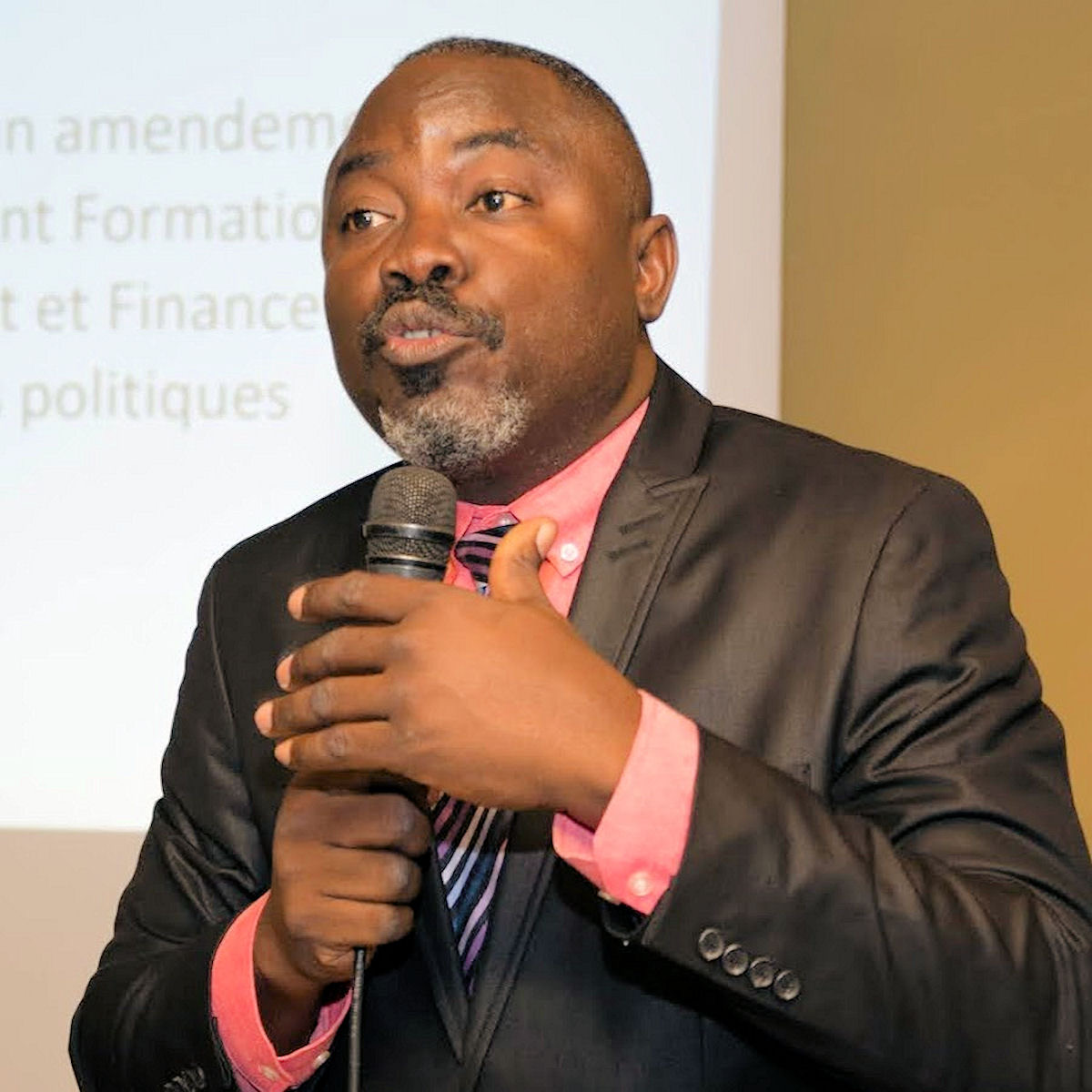
This arrangement allows for the interim Haitian government, which is beholden to Washington and Haiti’s private sector, to dictate which political parties can run in the election, while NED support will boost certain parties and coalitions which will inevitably get more international and local media coverage.
Three organizations have been tasked with supporting political parties via training for party leaders and representatives.
First, the Center for the Promotion of Democracy and Participatory Education (CPDEP) is supposed to “ensure the organizational and functional strengthening of political parties, addressing internal governance, electoral legislation, and political ethics.”
The CPDEP’s website conspicuously lacks any indication of who its partners are or where its funding comes from.
A Haïti Liberté journalist who visited its offices and spoke with people there reported that CPDEP clearly has “good relations with the American government” but was unable to obtain conclusive evidence of a funding from there.
The CPDEP and Justice Ministry have collaborated on several occasions since the program was announced to train political leaders and representatives.
Second, Groupe Croissance S.A. (GC) is an organization led by prominent economist Kesner Pharel. GC has collaborated with USAID on several projects and promotes DevHaiti, a magazine published by two organizations tied to USAID – GC and Papyrus, while the third partner receives funding from the U.S. Embassy.
Third, DAGMAR S.A. is tasked with assisting political parties master “digital tools and modern political communication.”
In January 2026, DAGMAR’s chief, Christine Coupet Jacques, hired Haiti’s NDI representative Jude Jeudy to assist in a conference on “Communication and Technological Capacities,” which is part of the government’s “Political Party Capacity Building Program,” indicating a symmetry between DAGMAR and the NDI’s goals.
In May 2023, author Jake Johnston revealed that “USAID allocated $5 million to support elections in Haiti.” The funds were given to the “Consortium for Elections & Political Process Strengthening,” which is made up of NED tentacles, the IRI and NDI, and the International Foundation for Electoral Systems (IFES).
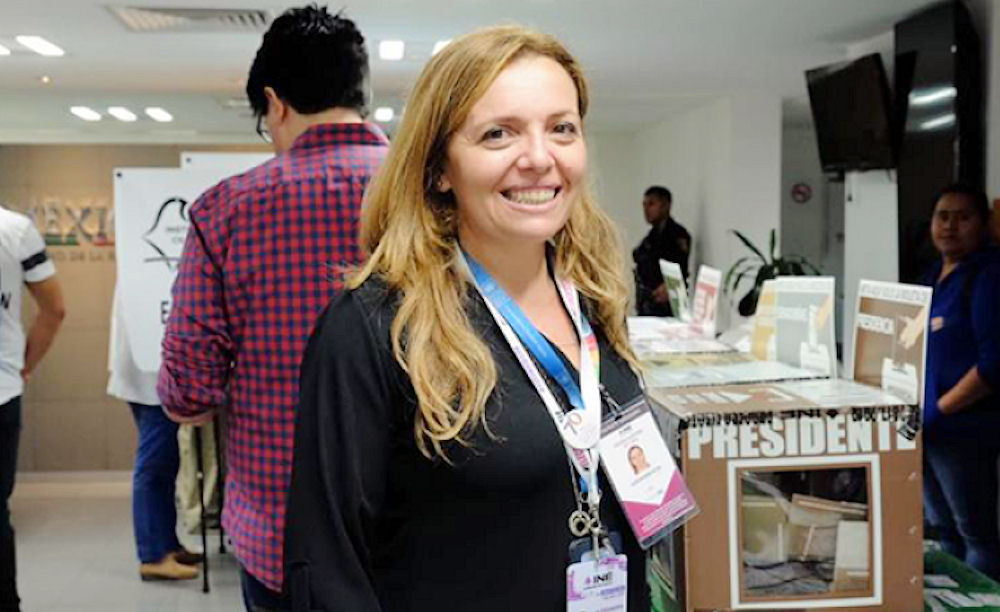
IFES is partnered with USAID, the U.S. State Department, the Canadian government, and the French government.
IFES’ current representative in Haiti, Alessandra Rossi, explained in an interview that the organization has assisted in two of Haiti’s past elections, including the “cleansed election” that followed the 2004 coup. Fanmi Lavalas, the most popular political party at the time, whose leaders were either jailed or expelled from the country, was prevented from participating. FL was banned from the following 2010-2011 election that brought Michel Martelly to power, following a direct intervention by Hillary Clinton’s State Department.
Claude Joseph is clearly a player
While the NED no longer publishes the organizations it funds, one political leader openly revealed that his party was receiving support from the NDI.
In a post on X, Claude Joseph celebrated the training his party members received from Jude Jeudy, the NDI representative in Haiti, in August 2025.
Joseph was Haiti’s interim Prime Minister under the President Jovenel Moïse. He tried to stay in the post after Moïse’s Jul. 7, 2021 assassination but was ousted by Washington and the CORE group, which favored replacing him with Dr. Ariel Henry, Joseph founded the Les Engagés pour le Développement (EDE) political party.
Joseph’s post to X celebrated a two-day training session for EDE members on financial management of political parties. This session reveals that the NED, through the NDI, is actively pursuing its program to “strengthen political parties.”


Perhaps more significant is that Claude Joseph is experiencing a significant boost in political visibility as these NED programs have been implemented.
Joseph and his party were instrumental in the CPT’s creation. EDE, then allied with Résistance Démocratique(RED) and the Regroupement politique Compromis Historique, chose Smith Augustin as their CPT representative.
EDE withdrew their support from Augustin once he and two other CPT members were credibly accused of trying to extort the head of Haiti’s National Credit Bank (BNC). Soon after, Joseph began criticizing the CPT, demanding it be replaced by a “better alternative.”
There is not enough evidence to say conclusively that the NDI has provided further support for EDE outside the two-day training session. Joseph and the EDE’s political activities since August 2025 do, however, point to potential financial support from outside.
The EDE is a signatory of the Consensus politique pour le redressement national et la réorientation de la transition. According to reporting by Le Nouvelliste, this Accord includes 70 signatories, including Pitit Desalin, EDE, and former Martelly Prime Minister Evans Paul’s Konvansyon inite demokratik (KID). Joseph is the coordinator of the Accord’s Steering Committee.
According to the Nouvelliste report, the Consensus “advocates for the creation of a transitional government based on a dual executive, composed of a transitional president and a prime minister, leading a technocratic government formed on the basis of a broad national agreement. The president would be chosen either from among the members of the Supreme Court or from among three independent figures nominated by political forces and civil society, recognized for their integrity, neutrality, and legitimacy.”
Two weeks later, the Accord’s Steering Committee sent an official communiqué to the ambassadors of Canada and the U.S. reiterating their position. They also claimed their coalition had grown to 150 signatories.
A week later, while giving a speech to supporters, Joseph claimed the Accord had garnered “200 political parties, platforms, coalitions, and civil society organizations” as signatories.
It is likely Joseph and the Steering Committee’s leadership are inflating the number of signatories since no list has been made public. It is clear, however, that Joseph and the EDE are actively recruiting and mobilizing all over Haiti.
In the same week as Joseph’s speech to supporters, EDE officials received training from Haiti’s NDI representative. Joseph crowed about the training session for “500 EDE political party leaders in the city of Aux Cayes, South Department.”
Since then, he has traveled throughout Haiti, seeking to rally support among community leaders.
Supporters of the Accord, with T-shirts emblazoned with “Block Consensus,” met on Jan. 11, 2026 to discuss strategy. A day earlier, Joseph’s efforts to ascend the political ranks seemed to bear fruit.
Bishop Dumas and Claude Joseph
On Jan. 10, Haitian Catholic Bishop Pierre André Dumas, who was leading efforts to build a political consensus for the transition following the end of the CPT’s mandate, invited Joseph as coordinator for the Accord’s Steering Committee to engage in dialogue.
Global Infos quoted Dumas as saying these negotiations are “part of a broader process involving international partners, including the Organization of American States (OAS), CARICOM, and the United Nations Integrated Office in Haiti (BINUH).” This suggests that these regional bodies which serveU.S. imperialist interests saw Joseph as a worthy interlocutor.
Dumas also claimed that, in addition to Joseph, representatives from 15 different political coalitions would also attend.

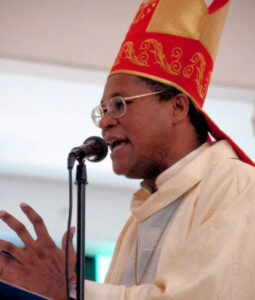
The negotiations were canceled, however, a few days later when Dumas stepped back from his promise to mediate, following an accusation that he was politically biased.
Citing “disinformation” about his political affiliations, Dumas said “I am not a member of any political organization.”
Dumas was defending himself from accusations from the National Network for the Defense of Human Rights (RNDDH) director Pierre Espérance, who alleged, without evidence, that Dumas had once been a member of the Rassemblement pour une entente nationale (REN).
Espérance is another NED-funded political operator inside Haiti, demonstrating how Washington is able to play both sides while narrowing the spectrum of debate.
The RNDDH is a political organization with the facade of a human rights group. The organization played a key role in the 2004 coup and has functioned since then as a platform for political machinations.
In a demonstration of his political power, Espérance seems to have derailed these negotiations less than two weeks before the CPT’s dissolution. Indeed, on Jan. 7, 2026 former PNH Chief and the current Secretary of State for Public Security Mario Andrésol said on the Magik9 radio program that “Pierre Espérance is the most powerful man in the Republic”.
Espérance is aligned with Haiti’s private sector and supports, along with the U.S. and EU, Prime Minister Fils-Aimé staying on after Feb. 7, after the CPT’s mandate expires.
Despite the collapse of the proposed mediated negotiations, the Consensus Politique was among the first political coalitions to be invited to the Villa d’Acceuil to meet with CPT on Jan. 18, a mere three weeks before the end of its mandate, along with the MORN political coalition, to discuss proposals for a new transitional government.
Joseph was also among 30 politicians invited to CARICOM to discuss the upcoming transition with the organization’s Eminent Persons Group which brokered the CPT’s creation in 2024.
Who will agree to participate in Haiti’s upcoming elections?
With the Trump administration being so aggressive and heavy-handed in its supervision of Haiti’s never-ending “transition,” many political parties may choose not to participate in the upcoming election. On the other hand, there are many questions about what the future holds.
Will new political parties, which have an authentic, measurable connection to the masses, emerge and run in the election? Will they be able to organize in the face of the political machines trained by the NDI and provided funding by the MJSP?
Will the new MJSP allow these parties to participate in the election in the first place? And what of the political parties and coalitions who purport to represent Haiti’s poor masses?
Will the former leading party – Fanmi Lavalas – continue to participate in the Washington-imposed charades of interim governing structures? And does the FL still have a large popular base after its prominent role, via its “presidential councilor” Leslie Voltaire, in the failed and reviled CPT?
Will the representatives of the Montana Accord, whose coalition has shrunk to a handful of bourgeois political actors, consolidate behind Jean Hénold Buteau’s anemic Alternative Socialiste political party and demonstrate the popular base they claim to represent?
The interim government has repeatedly ignored pleas for dialogue from Viv Ansanm spokesman Jimmy Cherizier
It seems certain that the Viv Ansanm political party will be barred from elections. It is not even legally registered but exists only via Cherizier’s announcement of its formation. But how will the new interim Haitian government conduct fair elections without negotiating access to neighborhoods controlled by its armed groups? And will the residents of these neighborhoods participate in these elections, considering they have been terrorized by the PNH, Vectus Global mercenaries, and Haitian paramilitary groups called “brigades.” Or will the new transitional government try to hold an election without Port-au-Prince, the largest city in Haiti and its West Department?
As Kervens Louissaint argues in a recent Haiti Liberté article, “political parties are empty shells or conduits for vested interests.” The majority of the political class have persisted for years in appealing to Washington for legitimacy rather than the Haitian people. Consequently, their connection to the people they claim to represent must be proven publicly.
Furthermore, Louissaint points out that “violence is a political actor in its own right.” Consequently, under current conditions “suffrage is not free. It is administered. And an administered vote produces exactly what is expected of it: the perpetuation of the order that established it.”
In fact, the PNH and their allied mercenary and paramilitary groups are responsible for 68% to 76% of deaths and injuries among the population over the past year, according to the BINUH.
The interim government has also repeatedly ignored pleas for dialogue from Viv Ansanm spokesman Jimmy Cherizier, a call supported by many Haitians who see dialogue as a path to prevent endemic violence and address social injustice. This includes a large interfaith demonstration and march held in Delmas in early January where demonstrators demanded “peace, dialogue, and reconciliation.”
Under these conditions, especially with Washington’s soft-power involvement, the elections will likely be “merely decorative,” Louissaint warns, as political violence directed at Haiti’s poor masses remains a persistent feature of life in Port-au-Prince.
Travis Ross is based in Montreal, Québec, and is co-editor of the Canada-Haiti Information Project. All his articles are collected on Subspace, and he can be reached on X.