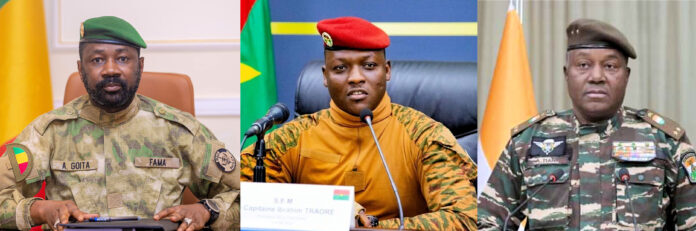

The rise of the Alliance of Sahel States (AES) threatens U.S. interests in Africa. Asserting sovereignty and a Pan-Africanist ideology, the three member states – Mali, Burkina Faso, and Niger – have shown an eagerness to develop their economies independent from Western influence.
After expelling the U.S. and French troops from their territories, AES members showed an openness to developing relationships with Russia and China. In response, Washington began increasing its presence in the West African countries on the AES’ southern border through AFRICOM.
Washington’s increasing military presence in West Africa is facilitated by the U.S. Global Fragility Act (GFA), a 2019 law designed to secure imperialist control over select U.S. neocolonies in Africa and the Caribbean while keeping Russia and China out.
In addition to the computing power demanded by A.I. and supercomputers as well as battery components needed for electric vehicles of all sorts, but above all, the materials needed for advanced defense systems and technology has intensified the race for access to and control of key minerals and rare earths thereby stoking the New Cold War. Over the past two decades, U.S. multinationals and administrations have viewed with alarm Russia and China’s growing presence in mineral-rich Africa, deeming the continent “essential for national security.”
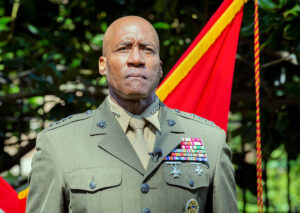
The AES states’ willingness to develop economic and military cooperation with Russia and China make Washington fear the example and expansion of the AES in West Africa. These coastal countries could provide Atlantic Ocean port access to the AES states, helping the expansion of China’s Belt & Road Initiative.
The AES presents a dual-threat to Washington as it provides young people across Africa with an inspiring model of sovereignty and Pan-Africanism, while also facilitating greater regional integration of Russia and China.

The GFA seeks to provide Washington with a strategy for containing the AES, while attempting to slow the regional influence of Washington’s New Cold War rivals.
The Global Fragility Strategy
Passed with full bipartisan support in 2019, the GFA was universally endorsed by U.S. think tanks and soft-power regime-change operations like the National Endowment for Democracy. It outlined a “peace building”strategy to “stabilize conflict-affected areas and prevent violence”in strategically situated countries that Washington has labeled as politically “fragile.”
Proponents said the GFA provided “an opportunity to drive the necessary change” that would prevent “adversaries such as China and Russia to expand their influence” with Washington’s “partners.”
Washington selected Haiti to be the first “partner” under the GFA, followed by Libya, Mozambique, Papua New Guinea, and West Africa’s littoral states: Benin, Côte d’Ivoire, Ghana, and Togo.
Despite his partial trimming, rebranding, and reorganization of other soft-power tools like the U.S. Agency for International Development (USAID), U.S. Secretary of State Marco Rubio signaled that he supports the GFA during his nomination hearing before the Senate Committee on Foreign Relations while it awaits reauthorization under bipartisan legislation introduced in last April. NATO’s Atlantic Council and the Council on Foreign Relations have recently encouraged the Trump administration to move quickly with reauthorization.
The GFA is underpinned by the 2020 “United StatesStrategy to Prevent Conflict and Promote Stability,” which meets the GFA’s requirement to develop a “Global Fragility Strategy.” It outlines a preliminary plan for providing 10-year “security-assistance” plans to its partners. These 10-year plans are at the core of the GFA’s dual goals of 1) maintaining control of its neo-colonies while 2) keeping Russia and China from developing greater influence in the region.
AFRICOM’s growing military presence in West Africa
In contrast to Haiti, Washington has made significant progress in implementing its Global Fragility Strategy in West Africa.
Negotiations to establish “security assistance” in West Africa follow the State Department’s “10-year Objectives forCoastal West Africa” plan which aims to “enhance security force responsiveness”in Benin and Côte d’Ivoire, according to the Global Fragility Strategy. AFRICOM provides this security assistance.
In his April 2025 statement to the Armed Services Committee, General Michael Langley, AFRICOM’S former leader, underlined the GFA’s significance, referring to it as a “model” for securing U.S. interests in West Africa.
AFRICOM’s expulsion from Niger last year caused a quick withdrawal of U.S. forces and equipment from its military base there, known as Base 201, which had become an intelligence hub from which U.S. forces used drones to surveil and police the region.
Côte d’Ivoire is a new hub for AFRICOM’s joint–military exercises in the region, “crucial for deterring terror organizations and other malign actors operating from Africa.”
Following the withdrawal, the State Department redirected armored personnel carriers and equipment originally intended for Niger to Ghana, Côte d’Ivoire, and Benin.
Since then, AFRICOM has provided more than $65 million for “counter-terrorism and border security”in northern Côte d’Ivoire, while “advanced talks”continue with Ivorian authorities to expand U.S. operations, including “the potential use of existing Ivorian military facilities for drone deployments.”
Côte d’Ivoire has also become a new hub for AFRICOM’s joint–military exercises in the region, which Langley emphasized were “crucial for deterring terror organizations and other malign actors operating from Africa.”
These “other malign actors” include Russia’s Africa Corps,which has been deployed to Mali. Côte d’Ivoire has signed a Maritime Law Enforcement Agreement with the U.S. to help build “maritime law enforcement capacity.” Benin has signed a similar agreement, named the “Coastal States StabilityMechanism,” with the U.S. and German governments.
The need to practice “maritime security tactics”is connected to China’s increasing presence in the region. China is currently investing in the development of over a dozen maritime ports in West Africa as part of its Belt and Road initiative. Some of these ports can accommodate Chinese naval vessels, providing yet another rationale for an increased U.S. military presence in the region.
Benin’s close relationship with Washington
The Trump administration recently reaffirmed their intention to pursue “regional security plans” with Benin, which has seen $800 million in U.S. investment over the past 20 years.
Following a Mar. 10, 2025 meeting with Benin’s Foreign Minister Olushegun Adjadi Bakari, Rubio “expressed appreciation for Benin’s cooperation on regional security” and discussed “promoting stability in West Africa.”
Rubio’s support for the GFA and Benin’s cooperation on “regional security” reflect the continued bipartisan consensus on foreign policy.
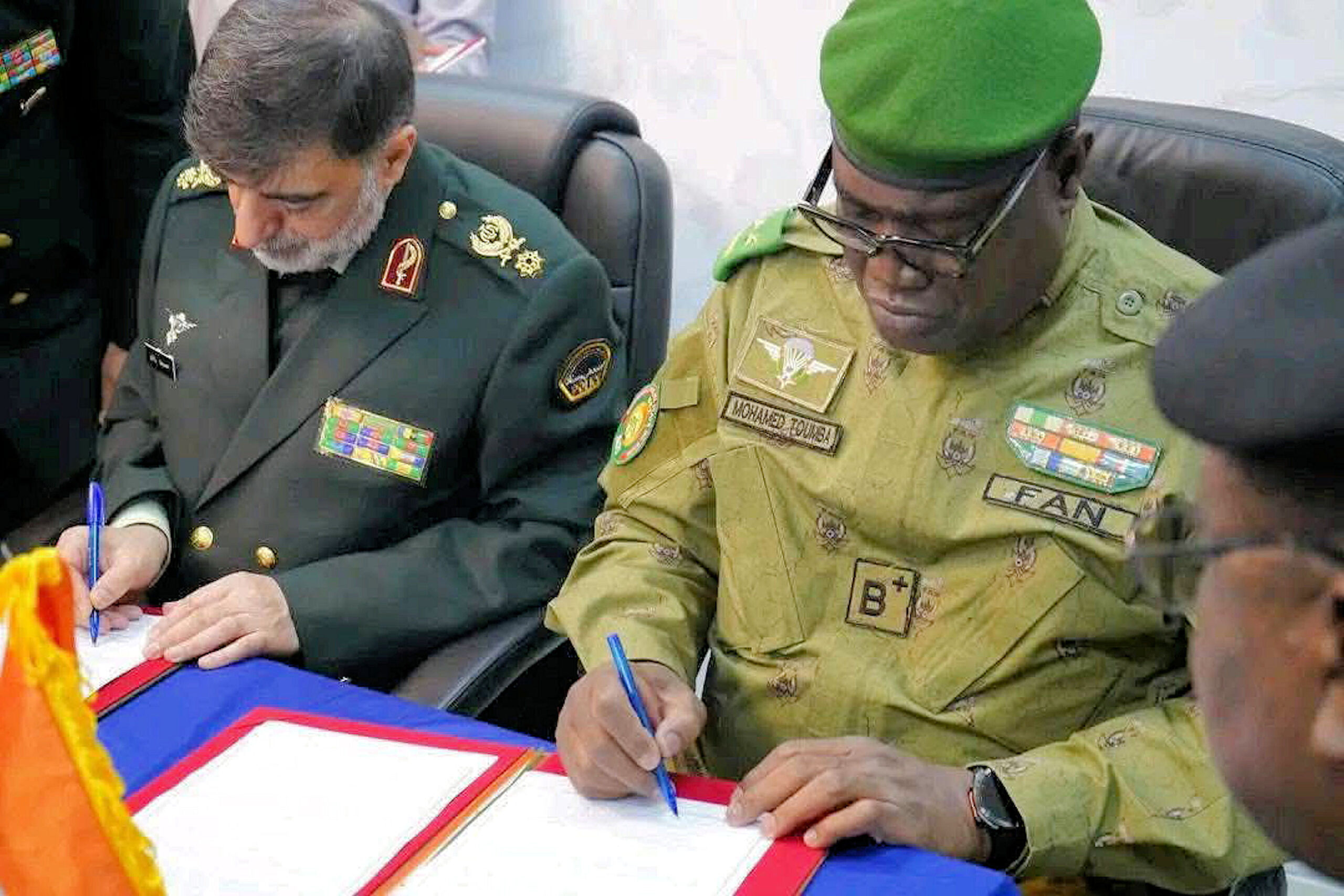
Published two months after Trump’s reelection, the Reportto Congress on Progress Implementing the SPCPS (Strategy to Prevent Conflict and Promote Stability) explains that the State Department “is training and equipping forces, including those deploying to the northern regions of Benin and Côte d’Ivoire,” bordering the AES states.
Washington has also provided “approximately $4 million to upgrade an airport in Benin” to enhance its “capacity to accommodate American helicopters,” creating a base of operations for U.S. forces there.
Benin also recently built “several forward operating bases and outposts near the border, recruited and deployed more troops, acquired drones and armored vehicles, and strengthened relationships with international partners,” including AFRICOM, reports Nigeria’s Global Upfront Newspapers (GUN).
According to the U.S. Embassy in Benin, this follows the U.S. and Benin signing “a bilateral cooperation agreement ‘strengthening collaboration between the Beninese Armed Forces’” in January 2025.
AFRICOM’s presence in Côte d’Ivoire and Benin’s Northern regions places U.S. forces between them and AES nations.
French special forces also continue to maintain a presence in these regions, journalist Thomas Dietrich reported.
However, the presence of U.S. and French forces has not yet prevented China from developing strategic partnerships with the two West African countries.
Benin and Côte d’Ivoire’s rapprochement with China
While the leaders of Côte d’Ivoire and Benin have allowed their countries to function as hubs for U.S. interests in the region, they have also welcomed Chinese investment.
On Sep. 1, 2023, Benin’s President Talon visited Beijing and finalized a strategic partnership between the two countries. Talon said China is a “great friend of Benin” and that they are “willing to work closely with China to actively advance the Belt and Road Initiative.”
The partnership seeks to facilitate Chinese cooperation and investment mainly in healthcare, infrastructure, digital economy, and agriculture.
China and Côte d’Ivoire also negotiated a strategicpartnership in September 2024. Chinese investment has supported key infrastructure projects including a hydroelectric power station and a university.
However, China’s development assistance is small compared to the West’s. A 2024 UN University study found European Union institutions and the UN are the largest multilateral donors to Benin, while France (its former colonizer) is the largest bilateral donor, followed by Canada and Spain.
West African leaders provide a front for Washington to contain the AES
While the GFA was passed before the AES’ founding, negotiations with West African governments to develop security assistance plans occurred as successful revolutions in Mali (2020), Burkina Faso (2022), and Niger (2023) took place. The GFA provided Washington a policy framework from which they could pivot their strategy to preventing an AES expansion into West Africa.
The AES was established following a joint summit in Niger on Jul. 7, 2024. The AES is a confederation led by Mali’s President, General Assimi Goita, and also includes Niger (led by Colonel Abdoura`hamane Tiani), and Burkina Faso (led by Captain Ibrahim Traore).
The AES leaders were brought to power by, or following, military coups, prompting the West’s mainstream media to label them “juntas”or military dictatorships.
The reality is, however, that these leaders were brought to power by “popular coups” that were supported by popularmovements in their home countries.
Burkina Faso’s charismatic leader Ibrahim Traoré, who turns 38 on Mar. 14, is arguably the confederation’s most visible and popular spokesperson. It is no coincidence that he wears a red beret, paying homage to the anti-imperialist and Pan-Africanist Burkinabe leader Thomas Sankara, who ascended to power in 1983. Sankara launched a socialist revolution, quickly developing land reform, infrastructure development, and expansive public health and literacy programs.
Similarly, all three AES members have moved to establish sovereign control over their natural resources, implementing new mining codes that ensure profits are reinvested in programs that benefit the general population. They have also withdrawnpermits from mining companies which don’t comply with the updated codes. Burkina Faso has nationalized several gold mines, causing UK-based Endeavor Mining to lose control of its interests there, while France has lost control of uranium mined in Niger, which, soon after, sought investment from Russian firms to directly invest in uranium and other natural resource production.
The AES was established following a joint summit in Niger on Jul. 7, 2024.
Mali has been particularly assertive. Canadian and Australian mining companies have been thrown out of the country. Canadian mining giant Barrick Gold’s CEO cannot step foot in Mali because of an arrest warrant, while four of his employees remain under arrest for allegedly laundering billions of dollars. (Canada is number one globally in equity financing raised for mining and mineral exploration.)
Last year, Resolute Mining CEO Terry Holohan was detained for a week and only released after the Australian company agreed to pay US$160 million to Mali and comply with their new mining code.
Washington perceives the AES’ resolve to establish sovereign control over their resources as a direct threat to U.S. national security interests, just as it sees as dangerous the AES’ participation in China’s Belt and Road Initiative and greater cooperation with Russia.
Minerals are a matter of national security for Washington
The U.S. government’s Global Fragility Strategy also aims to prevent Russia and China from gaining more political leverage in the region.
A recent Executive order from the Trump administration highlighted that “processed critical minerals and their derivative products are essential for national security because they are foundational to military infrastructure, energy infrastructure, and advanced defense systems and technologies.”
This is to avoid “major global foreign producers” (i.e. China) from creating “arbitrary export restrictions” and exploiting their “supply chain dominance” to “distort world markets and thereby gain geopolitical and economic leverage over the United States.”
China’s dominance in access to, and processing of, minerals and rare earths essential for advanced defense systems and technology is what Washington views as a threat to U.S. national security.
Indeed, General Langley claimed in his final preparedstatement for the Armed Services Committee, that AFRICOM will “achieve peace through strength” by “countering terrorist organizations that are increasing their ability to threaten the homeland while countering activities of China and other adversaries.”
China is mentioned 18 times in his statement. Many more times than any African country, revealing AFRICOM’s primary focus in Africa: keeping China (and Russia) out so the U.S. and its allies can secure access to minerals, while the threat of terrorism provides a justification for their continued military presence in the region.
The AES is a direct threat to US interests in West Africa and the Sahel
The AES leadership has been able to implement popular reforms due in part to developing diplomatic, military, and trade relations with Russia and China. This rapprochement has undermined U.S. interests in the region.
Traoré has expressed his enthusiasm about the prospects of growing relations with Russia on several occasions. In a speech delivered to the second Russia-Africa Summit held in St. Petersburg in July 2023, Traoré described Russia as “family to Africa.” He then encouraged other African leaders to develop “better relationships with the Russian Federation to meet the needs of our people.”
The people in the region want a “change in politics,” Traoré explained during a May 2025 meeting with Vladimir Putin. “This inevitably leads us to turn to our traditional partners, and to turn to real friends, who are Russia, which has supported us since the period of decolonization until today,” he continued.
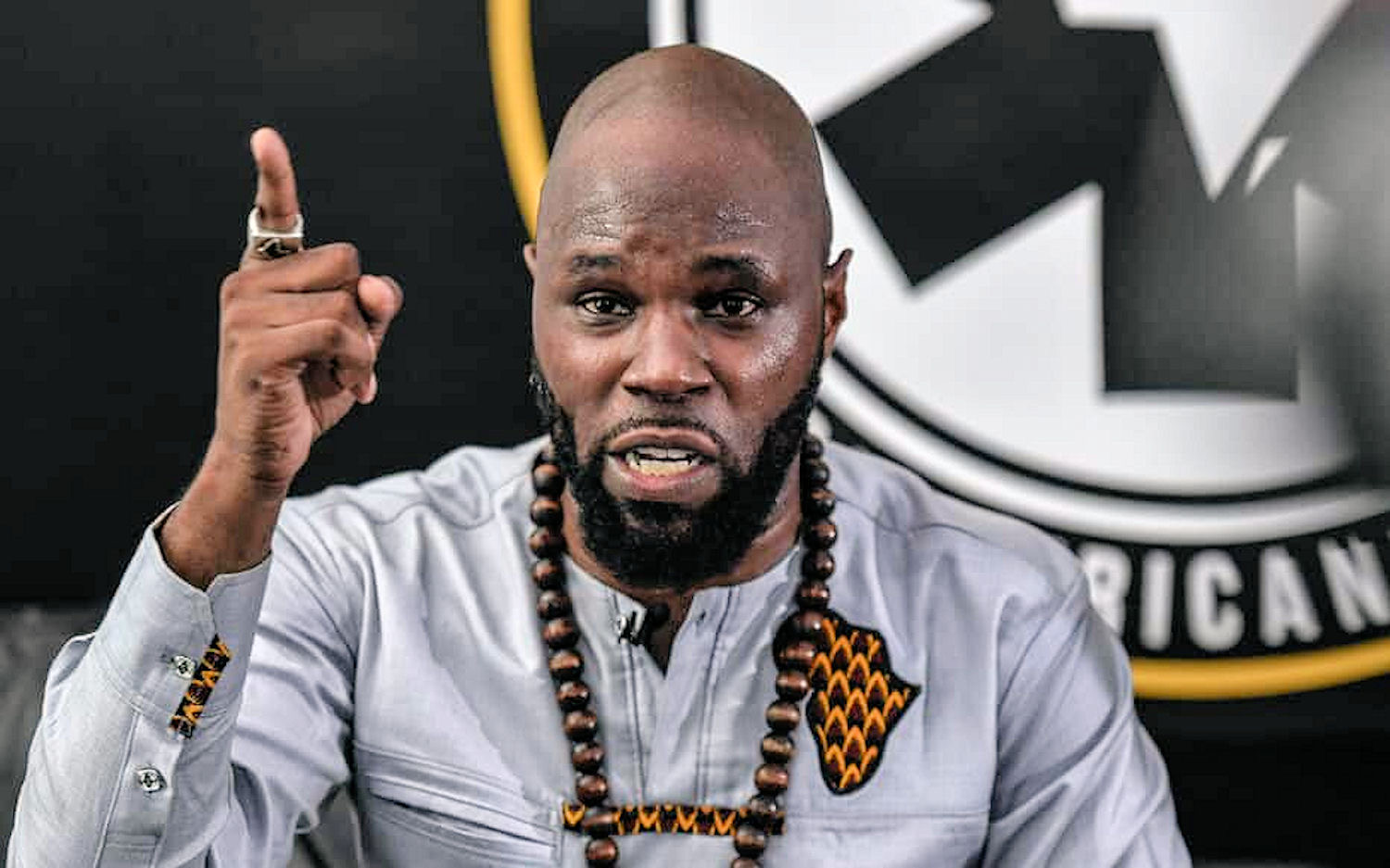
Photo: Stephane De Sakoten/AFP
Washington has reason to fear an expansion of the AES into West Africa. Decades of autocracy in Benin, Côte d’Ivoire, and Togo have left young people in those countries eager for change. The popular revolutions in the Sahel threaten to cause a cascade effect in the region. An expansion of the AES would threaten U.S. interests there, as Russian and Chinese diplomatic, military, and economic cooperation would likely significantly increase.
A month after Traoré made his comments, Mali’s president Assimi Goita visited Putin, delivering a ceremonial Tuareg cavalry sword, a symbolic gesture that highlighted the deepening ties between the two countries.
Meanwhile, the complicity of the leaders of Benin and Côte d’Ivoire has earned the contempt of AES leadership. Ibrahim Traoré singled them out as “puppet leaders” in a speech delivered at the official summit in Niamey to confederate the AES.
AES leaders foresee expanding “in the future,” Traoré said in a May 2025 RT interview, “but for now we have to normalize a lot of things.” There are signs that in many neighboring countries the populations are eager to join. A recent poll released showed 54% of Togolese favoring joining the AES.
Togo’s Foreign Minister Robert Dussey later explained that “Togo is exploring the possibility of joining the AES. It is a strategic decision that could strengthen regional cooperation and provide coastal access to member countries.”
Meanwhile, the ruling duopoly in Benin has further consolidated power by winning all of the parliamentary seats in a recent national election, in which only 37% of the population voted. This prevents the only possible challenger – the Democrats – from running a candidate in the upcoming presidential election.
Kémi Séba, a Beninese citizen and the leader of the NGO Urgence panafricanist (UPA), challenged the ruling duopoly, and threatened to mobilize disenchanted Beninese citizens eager for change.
As the UPA’s leader, Séba was integral to building a grassroots panafricanist movement in the Sahel and West Africa. He is an enthusiastic supporter of the AES.
The Beninese judiciary issued an international arrestwarrant for Séba, accusing him of condoning crimes against the state and inciting rebellion. This followed Séba’s support for a coup attempt by members of Benin’s armed forces that was thwarted on Dec. 7, 2025 with military support from Nigeria’s armed forces.
The quick mobilization of Nigerian forces to prevent a coup in Benin underlines the country’s function as a hub of U.S. imperialism in the region. It also demonstrated Washington’s desire to prevent revolutionary governments from establishing themselves in the region and expanding the AES.
Ghana and the consequences of “partnership” under the GFA
Recent events in Ghana, the only functioning democracy within the GFA’s West African states, illustrate Washington’s goal of ensuring these governments do not join the AES.
Ghanaians re–elected President John Mahama in December 2024. Mahama’s first term ended in 2020, when he was replaced by Nana Akufo-Addo, who governed Ghana while the GFA was implemented there.
Mahama invited Traore to his inauguration ceremony, signaling a desire to develop diplomatic relations with the Burkanibe leader and the AES generally. Traoré was welcomed with thunderous applause from thousands of young Ghanaians outside the inauguration ceremony.
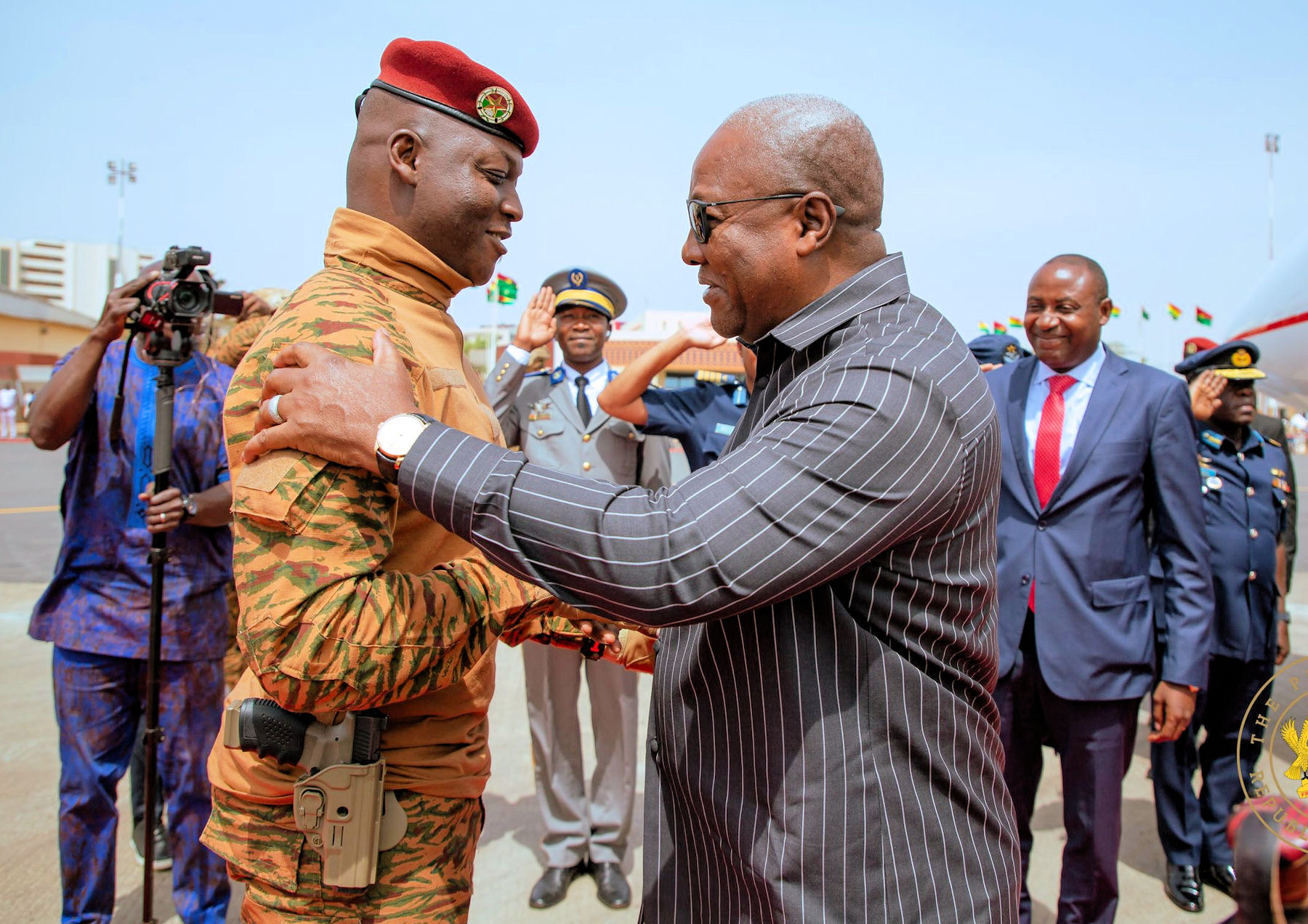
Photo: Ghana News Agency
A few months later, in March 2025, President Mahama visited all three AES leaders and appointed a Special Envoy.
Mahama’s friendly approach to the AES seems to have sparked a reprisal from Washington. On Jul. 11, 2025, Ukraine’s President Volodymyr Zelensky falsely claimed to have a “drone agreement”with Ghana. Sources close to Mahama told WestAfrica Weekly that Zelensky’s claims are a complete mischaracterization of a conversation between the two leaders. Zelensky, an opponent of Russia and servant to Washington, has supported regional “rebel groups” in their attacks against Malian soldiers, prompting Mali and Niger to sever diplomatic relations with Ukraine.
Zelensky’s attempt at disinformation about Mahama was likely on behalf of Washington in a move to destabilize Ghana’s government. West Africa Weekly noted a “disturbing pattern” following Zelensky’s announcement, pointing to “an externally coordinated strategy aimed at fracturing fragile regional alliances and provoking tensions between neighboring states.” This coordinated strategy appeared to escalate in early August 2025 when a helicopter carrying five high-level Ghanaian government officials crashed, killing everyone aboard.
Among the victims were Defense Minister Edward Omane Boamah, Environment Minister Ibrahim Murtala Muhammed, Deputy National Security Coordinator Alhaji Mohammad Muniru Limuna, and Samuel Sarpong, Vice Chairman of Mahama’s National Democratic Congress party. Several reportsclaim that President Mahama was initially supposed to be onboard the helicopter.
Boamah had led a delegation to Ouagadougou, Burkina Faso in May 2025 where he attended the inauguration of a new Memorial Park honoring Thomas Sankara. At the ceremony, Boamah described Sankara as “fallen, but forever alive in our hearts.”
Zelensky’s role strongly suggests that Washington is behind this coordinated strategy to destabilize Ghana.
Seemingly undaunted, the governments of Ghana and Burkina Faso signed in February seven bilateral agreements aimed at increasing security and economic cooperation, indicating that Washington’s attempts to intimidate Ghana’s leadership have so far been unsuccessful.
U.S./Israeli war against Iran may push West Africa towards the AES
Ironically, Trump’s Washington, with its Zionist colony, Israel, may be subverting its own GFA strategy in West Africa by illegally launching war against Iran on Feb. 28.
Already, relations between the AES and Iran were close and getting closer. “With Western influence in the Sahel region waning, particularly that of France, Iran has moved to deepen its ties with the Alliance of Sahel States [AES],” reported MSN on Mar. 5. “At the end of February, Iranian President Massoud Pezeshkian and his defense minister, Aziz Nasirzadeh, welcomed Burkinabe Defense Minister General Celestin Simpore to Tehran to discuss strengthening the partnership in the field of security. Niger’s Prime Minister Ali Lamine Zeine also traveled to Tehran in January 2024.”
Due to these developments, the West African countries are very much in play, particularly Ghana. On Mar. 4 in Accra, Israel’s Ambassador to Ghana, Roey Gilad, pleaded with Ghana to add its “very important voice” in support of the U.S./Israel war against Iran. However, Gilad’s appeal was not helped when, on Mar. 6, Israel bombed Ghanian troops who were deployed as a part of the United Nations Interim Force in Lebanon (UNIFIL).

UNIFIL reported that “three peacekeepers were injured inside their base in Qawzah in southern Lebanon… The most severely injured has been transferred to a hospital in Beirut for treatment.”
Meanwhile, Ghana’s military said its UNIFIL battalion headquarters came under “two missile attacks,” adding that “two soldiers are critically injured, while one other has been traumatized, ” according to The Herald Ghana. “The officers’ mess facility was also hit and completely burned down.”
“It is unacceptable that peacekeepers performing UN Security Council-mandated tasks are targeted,” it added.
In a statement, Lebanese President Joseph Aoun condemned the “Israeli attacks” adding that they had “even reached the point of a direct assault on UNIFIL.”
The war “has placed the Mahama government in what analysts describe as among the most delicate diplomatic positions Accra has faced in the post-Cold War era,” reported The African Mirror on Mar. 9.
First, under a 2018 Status of Forces Agreement (SOFA), “the United States established a military logistics presence at what is now Accra International Airport, operating under the West Africa Logistics Network,” the Mirror continued. That agreement “granted American military personnel and equipment access to and transit through Ghanaian soil.”
The Mirror said that it “remains a matter of official ambiguity” as to whether Operation Epic Fury used Accra’s airport, but “the active SOFA agreement means Ghana, whether it chose the role or not, was already bound within the architecture of American power projection.”
Furthermore, “just five days before the strikes on Iran commenced, [AFRICOM’s] Commanding General, Air Force Gen. Dagvin Anderson, sat down with President John Dramani Mahama… in Accra, alongside U.S. Chargé d’Affaires Rolf Olson” in a private meeting “described officially as a reaffirmation of the decades-long partnership between Washington and Accra,” the Mirror noted, and the sit-down “has since attracted scrutiny from Ghanaian parliamentarians and civil society who want answers about what was discussed.”
“Tehran has noticed Ghana’s position…. [and] Accra’s diplomatic tone, which began as neutral and cautionary, has steadily sharpened into something closer to a formal legal protest” following the strike on its soldiers in Lebanon, the Mirror concluded. Ghana’s Foreign Ministry has demanded “that those responsible be identified and held accountable” while “President Mahama himself has remained carefully measured,” walking a “diplomatic tightrope,” and “did not align with either belligerent.”
GFA faces a tough road ahead
In short, the war launched unilaterally by the U.S. and Israel against Iran is going to make it much more difficult for Washington to win over “hearts and minds” in Benin, Côte d’Ivoire, Togo, and Ghana. In fact, the presence and operations of AFRICOM in those countries may turn out to be counterproductive.
Global outrage and disgust against the U.S. and Israeli offensive, especially as it targets civilians, seems only to be deepening, while enthusiasm and support for Iran appears to be growing as it continues to defiantly wage a sustained, strategic, and effective retaliation to the attacks.
As the Trump administration has somewhat hobbled its soft-power institutions, like USAID, and overextended the Pentagon’s hard-power forces, Washington’s Global Fragility Strategy may turn out, at least in West Africa and Haiti, to be too little, too late.
Travis Ross is based in Montreal, Québec. He is also the co-editor of the Canada–Haiti Information Project. Travis has written for Haiti Liberté, Black Agenda Report, The Canada Files, and TruthOut. All his articles are collected on Substack. He can be reached on X.