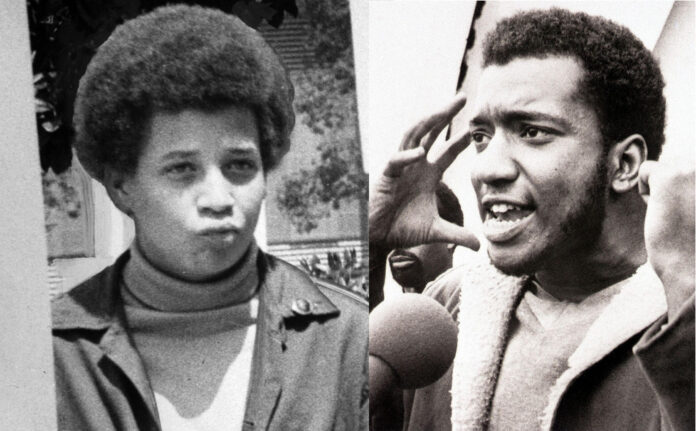

The following text was submitted to Haïti Liberté by a collective of high-school students in Brooklyn, some of Haitian and Caribbean descent. Although the manifesto is not solely germane to Haiti, we are publishing it because it reflects the political and ideological ferment and sophistication that is developing in the upcoming young generation internationally, faced with a dire economic outlook, the growing risk of war, an ongoing genocide in Gaza, and the political dysfunction plaguing capitalist nations generally.
Kim Ives
“… with teeth as sharp as razors … and a three-point fork in hand …”
We stand at a historical inflection point. Global capitalism, once the driver of material advance, now concentrates wealth, corrodes civic life, and accelerates ecological breakdown. It incentivizes short-term profit over social well-being, externalizing costs onto people and nature, and converting public goods into private rent. This manifesto argues that a democratic transition to a post-capitalist society is both necessary and possible by redesigning institutions, reclaiming the public sphere, and reorganizing economic ownership.
Today’s system produces extraordinary innovation alongside persistent mass insecurity. It privileges speculation over production. Monopolistic platforms extract rent from social life; supply chains hide labor exploitation. Markets left unconstrained create power imbalances that undermine democratic accountability. These are structural problems, not mere policy glitches. Any viable alternative must center five principles: democratic control, ecological limits, social equality, plural ownership, and deliberative legitimacy.
Democracy should extend to workplaces and markets. The biosphere’s boundaries must set economic ceilings. Registration should be designed to guarantee basic livelihoods (not subservience to an imperialist nation-state). Ownership should be diversified to include cooperatives, public enterprises, and commons, and large decisions should be anchored in transparent, evidence-based public deliberation.
So we say: expand democratic ownership, promote worker cooperatives, municipal enterprises, and public investment banks as legal and fiscal instruments for democratizing productive assets.


We must curb speculative rent-seeking through robust financial regulation, high taxes, especially on unproductive capital gains, and public banking that channels credit toward collective goods and low-carbon infrastructure.
Universal social floor: Introduce universal basic services and experiment carefully with a Universal Basic Income (UBI) to decommodify survival and empower bargaining in the labor market. OECD reviews and recent experiments show UBI is a policy option worth assessing, though design and financing matter.
Platform and data commons. Treat core digital platforms and social data as infrastructure subject to democratic governance, either socialized, institutionalized, or heavily regulated to prevent monopolistic capture. Green constraints. Enforce binding carbon and resource caps while funding a just transition for workers in affected industries. Strategy: democratic policies plus civic action. Civil resistance, strikes, participatory budgeting, and international pressure are the tools of a society seeking institutional redesign. Planned programs, public deliberation, and coalition governance can create durable reform.
Culture and ethics: Economic change requires cultural reorientation from consumerism and status competition towards solidarity, care, and long-term stewardship. Education, public media, and community institutions must cultivate civic capacities and a shared commitment to intergenerational justice. As we also prioritize a sense of community, we fully expect commitment to and realization of what is designated in our plans. The further we deviate from the planned transition, the greater the ramifications, equivalent to the magnitude of said deviation.
This manifesto is neither technocratic nor naive. It advances concrete institutional reforms guided by equality, ecological stability, and democratic sovereignty. History shows systems change when ideas cohere with viable institutions and popular movements. Let us craft these institutions now: worker ownership, public finance geared to common goods, socialized data infrastructure, and universal social floors. By democratizing both markets and the state, we can construct an economy that serves life instead of buying it.
(We commit to this program out of a shared need to create change here in Brooklyn and around the world, and the solidarity we hold together as students.)