I watch with bitterness as our countries are chained once again.
Not by soldiers, but by contracts and debt.
I see the Caribbean – splendid and humiliated – turned into a servant of empires that no longer need cannons to dominate.
The flags have changed, but not the hierarchies: today’s masters wear suits and call themselves investors.
Now our governments sell them what they once tried to conquer.
And while our people fight among themselves over invented borders,
the new colonizers divide our coasts, our mountains, our dignity.
What good is breaking the chains of independence once
if we continue to serve the same power under another name?
Nuestra América, our America,Latin America, will never be truly free until it learns to recognize itself as one – owner of its land, its voice, and its diverse bodies – all bodies.
—
The result is a continent divided and docile.
We are separated by nationalisms, prejudices, and misread identities.
Governments, instead of guaranteeing social justice,
protect foreign capital and repress local protest.
Universities teach imported theories.
Media repeats borrowed narratives.
And cultural institutions survive by begging funding from the same countries that keep us dependent.
We have become colonies once again –
of the global economy, of foreign debt, of the tourist industry,
and of the brands that dictate how we must live and think.
—
America is not free.
The Caribbean is not free.
The Dominican Republic – my country – is not free.
Not while access to the sea depends on a resort.
Not while farmers are displaced to make room for golf courses.
Not while public education is impoverished, healthcare privatized, and whole communities rendered invisible to their own governments.
Not while women are denied rights over their own bodies and abortion remains criminalized.
Not while LGBTQ+ people are discriminated against by law and marriage equality is forbidden.
Not while people with disabilities are excluded from public life.
Not while those of Haitian descent remain stateless, denied even the country of their birth.
Not while racism consumes the nation like the most devastating plague it has ever known.
Not while artists and thinkers – those who could imagine another nation –
are pushed to the margins of the system.
Freedom is not merely the presence of a flag.
Freedom is sovereignty.
And sovereignty today means justice, dignity, and belonging.
—
America was liberated by arms; now it must be liberated by ideas. By art.
Colonization today operates through the mind, through language, through imagination.
We were taught to believe that being Caribbean means being servile,
that being Latin American means being exotic,
that poverty is our fault.
We were trained to be dependent and grateful.
Our task now is not only to resist, but to rewrite.
We must change the grammar of power.—
Enough of looking north for approval.
Freedom will not come from those who profit from our dependence.
We don’t need tutors – we need alliances.
We don’t need investments – we need sovereignty.
Let the land return to those who live on it.
Let the coasts become public again.
Let work recover its dignity.
This is not nostalgia for old revolutions; it is a moral urgency.
The Caribbean cannot continue being the plantation of the powerful, nor the backdrop of global tourism.
It must become a new model of life: just, sustainable, human.
A revolution without weapons,
without blood,
but with consciousness.
—
History seems asleep,
and injustice continues to call itself progress.
My aim is not to recall the battles of the past, but to invite reflection on the next one – the battle for the dignity of this continent.
And if this America is to be reborn,
let it rise without fear,
with the fire of its people,
and the sea as its witness.
Let no one be deceived:
independence is not inherited.
It must be defended every day.
—
I ask myself what it means today to be from the Dominican Republic – a republic born from the dream of freedom,
that has devoted itself to hating its impoverished neighbor
instead of confronting the powerful.
—
We’re being told repeatedly the myth of the “Haitian invasion.”
A perfect story to distract us, to keep fear alive, to justify violence.
While we applaud a border to the west,
the real invaders enter freely through airports,
investment treaties,
and promises of “sustainable development.”
They arrive with briefcases and contracts, with speeches of progress and diplomatic smiles.
They buy our beaches and patent our sun.
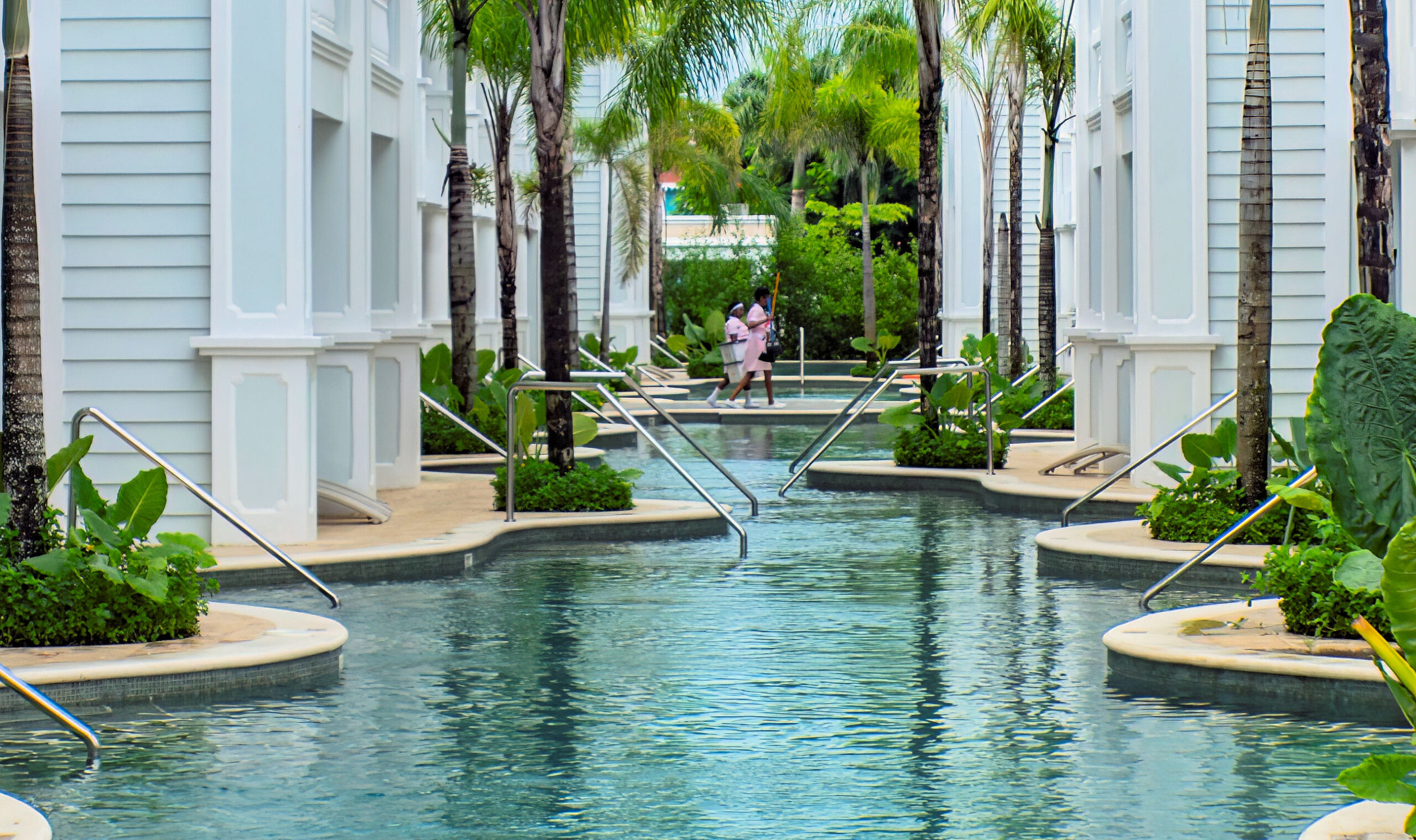
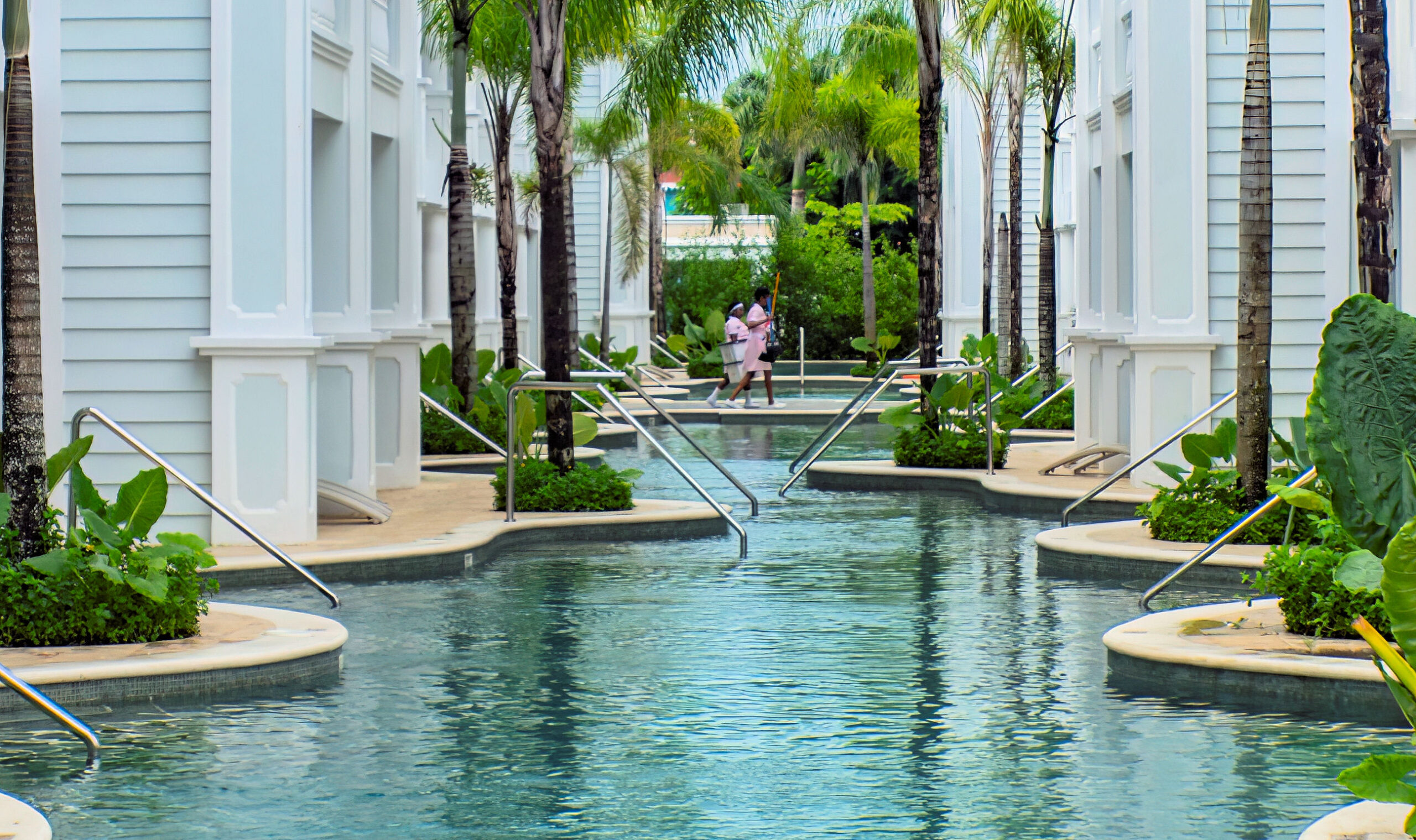
They claim to help us, but what they build are luxury complexes
where comfort feeds on someone else’s sweat.
—
They tell us tourism “creates jobs,” as if that were synonymous with freedom.
But these are not dignified jobs – they are servitude disguised as hospitality.
The invisible pillars of the Caribbean that the North sells as paradise.
The paradise of some is always the servitude of others.
This is not free labor; it is dependency dressed up.
The same colonial relationship, now with air conditioning and all-inclusive packages.
—
Meanwhile, they convince us that danger comes from Haiti.
What a tragic lie.
The true enemy does not cross the border on foot – it lands in a private jet.
The true danger is born in the heart that denies another’s humanity.
The Dominican Republic – Haiti’s sister by geography and by fate –
has closed the doors of education to Haitian children,
denied healthcare to women when they most need it,
and reduced an entire population to forced labor – without rights, without fair wages.
This is not employment; it is modern slavery, tolerated by the State and hidden beneath the dust of construction sites.
Let no one be deceived:
The Dominican Republic is building, in cement, the destruction of its own identity —
repeating the same genocidal racism that exterminated the Taínos,
now disguised as patriotic pride.
—
No republic can call itself free while oppressing its neighbor who shares the same land.
Freedom is not defended by walls or documents, but by conscience.
—
Haiti does not steal our beaches, nor privatize our coasts.
It does not negotiate tax exemptions that hand over the entire country to the lords of global capitalism.
It has simply been easier to hate the impoverished
than to question the powerful who create poverty.
We have been taught to defend a border while surrendering the nation.
And we do it proudly, believing that protecting ourselves from “the other”
is protecting the homeland.
—
Tourism, they tell us, is the future.
But the question remains: the future for whom?
Our people are not poor for lack of tourism;
they are poor because of tourism and how it has been designed —
a model where land, water, and human labor are exploited,
where the State guarantees investors’ privileges,
not workers’ rights.
—
There is no freedom in working for a salary that barely pays for transport and food.
No dignity in depending on a tourist’s whim.
No safety in a country where everything essential is for sale.
They tell us tourism “puts us on the map,”
but in truth, this tourism erases our own map:
our sovereignty, our identity.
Let us no longer be the exotic landscape in someone else’s catalogue.
We don’t need more hotels.
We need justice.
We need to remember that true wealth lives in our people,
not in investments that promise dollars in exchange for dignity.
As long as we believe foreigners must tell us what has value,
we will remain colonized – even while our flags wave free.
—
It is time to look with different eyes.
To understand that the Caribbean is not a postcard, but a living body: mixed, contradictory, powerful.
And the future is not in serving the colonizer,
but in imagining a nation that does not kneel before capitalism, imperialism, or colonialism.
—
Perhaps the first step, in the Dominican Republic,
is to stop repeating the fears we were taught –
the fear of Haiti,
the fear of losing the crumbs of tourism.
What we should truly fear
is continuing to hand over our land.
Because when we no longer have free mountains or public coasts,
when everything is privatized and the sea has even more owners,
it will already be too late to speak of independence.
—
But there is still time.
We can write another story.
One where our lands exist for those who inhabit them.
Where tourism no longer means servitude, but fair exchange.
One where belonging is not a luxury, but a right.
Because if history has taught us anything,
it is that no empire is eternal.
And our people – with all their memory of resistance –
will reinvent themselves once again.
But this time, if we wish to survive,
independence must be absolute.
It will not be enough to break political chains;
we must also shatter those of the soul.
Independence from the capitalism that buys us,
from the racism that divides us,
from the fear that tames us,
from the false dream of a Caribbean and an America
modeled after Europe and serving U.S. interests.
Because as long as we believe our destiny is to serve the foreigner,
we will remain colonies – even beneath our own flags.
The deepest emancipation will not be of the territory,
but of the mind.
And when we finally learn to imagine for ourselves,
then the Caribbean and Latin America will cease to be mirrors for others –
and become, at last, their own light.
Noa Batlle Manukyan is a Dominican artist and writer whose work examines how colonialism shapes life in the Caribbean. They write about belonging, freedom, and the body as site of resistance and reimagination.